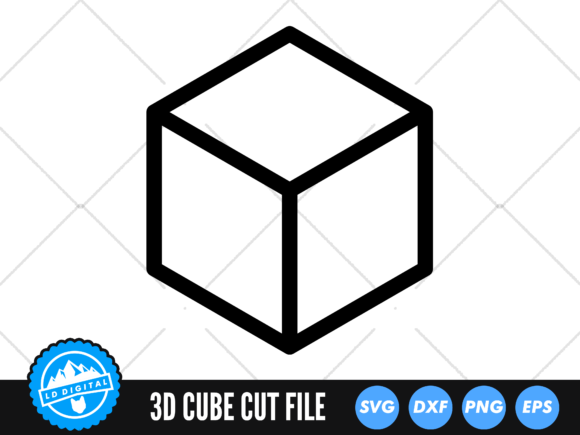
Cube SVG Files 3D Cube Cut Files: A Practical Guide to Avoiding Common Pitfalls
When you search for Cube SVG Files 3D Cube Cut Files, you are likely looking for a versatile geometric asset that adds depth and structure to your creative projects. Whether you are a seasoned pro using a Cricut Maker or a beginner dipping your toes into digital crafting with a Silhouette Cameo, the demand for clean, usable vector shapes is high. However, simply downloading a file does not guarantee success. Many creators overlook critical details regarding file compatibility, software requirements, and intended use cases, leading to frustration rather than finished products.
This guide aims to help you navigate the specifics of acquiring and utilizing these digital assets effectively. By understanding what you are actually buying and how to prepare your workflow, you can ensure that your Cube SVG For Cricut, Silhouette and other cutting machines deliver the quality results you expect.
Understanding What You Are Actually Buying
A common misconception among new buyers is that purchasing an SVG file grants them a physical product or a ready-to-print image in every format. It is crucial to remember upfront that this item is an INSTANT DOWNLOAD. You will not receive any physical item in the mail. The value lies entirely in the digital utility of the files provided within the ZIP archive.
When you purchase this set, you are acquiring five distinct file formats, each serving a specific purpose in the design and production pipeline:
- SVG (Scalable Vector Graphics): This is the primary file type for cutting machines. It is compatible with Silhouette Studio, Cricut Design Space, and other cutting software. If your goal is to cut vinyl, cardstock, or fabric, this is the file you need.
- DXF: Often used as a backup or alternative vector format, specifically useful if you are working with older versions of Silhouette Studio or specific CAD applications.
- JPEG & PNG: These are raster images (clip art). They are perfect for printing on mugs, shirts, or posters where no cutting is involved. The PNG version typically includes a transparent background, making it ideal for overlays in graphic design software.
- AI (Adobe Illustrator): This is a vector-based source file. It allows you to edit colors, resize without losing quality, and export custom variations for your own branding. It is essential for professionals who need to modify the geometry before sending it to a cutter.
By receiving all five formats, you gain maximum flexibility. You can cut a cube shape for a t-shirt decal using the SVG, then use the PNG for a social media post announcing your new product line. This versatility is why creators seek out comprehensive bundles rather than single-format files.
Common Mistakes That Ruin Cutting Projects
Even with high-quality files, errors often occur during the preparation phase. One of the most frequent issues is assuming that any computer can handle the cutting process seamlessly. While the files are universal, the software required to interpret them is not built into standard operating systems by default.
Mistake #1: Ignoring Software Compatibility
You must have a cutting machine with software that is compatible with SVG files. Before purchasing, please make sure your machine and software are compatible with SVG files. For instance, while Cricut Design Space handles SVGs natively, some basic online editors may struggle with complex layered vectors. If you are using Silhouette Studio, ensure you are aware of the differences between the free Basic version and the paid Designer Edition, as some advanced features may be locked behind the paywall depending on the complexity of the cube design.
Mistake #2: Skipping the Test Cut
Never send a valuable material like genuine leather or thick chipboard directly into the machine after loading the file. Scaling errors are common. If you plan to print the cube on a mug, check the dimensions in your software against the actual size of the mug’s surface area. A cube that looks perfect at 50% scale might become distorted or unrecognizable when scaled up to 100%. Always perform a test cut on scrap paper or cheap vinyl first to verify alignment and blade pressure.
Mistake #3: Confusing Raster with Vector
Attempting to cut a JPEG or PNG file is a guaranteed failure. These files lack the mathematical paths required by cutting blades. If you try to import a JPEG into Cricut Design Space expecting it to cut, the software may attempt to trace lines poorly, resulting in jagged edges or missed cuts. Always use the .SVG or .DXF file for cutting tasks. Reserve the JPEG and PNG strictly for printing or digital graphics.
Optimizing Your Workflow for Better Results
To get the most out of your Cube SVG Files 3D Cube Cut Files, adopt a systematic approach to file management and editing. Here is how experienced creators streamline their process:
- Unzip Immediately: All the files come in the ZIP format. Extract them to a dedicated folder on your computer immediately upon download. Do not try to work from inside the compressed archive, as this can cause corruption or access errors.
- Check File Integrity: Open the AI file in Adobe Illustrator or Inkscape (a free alternative) to inspect the layers. Ensure that the 3D effect is achieved through overlapping shapes rather than embedded images. This ensures the file remains editable and scalable.
- Plan for Multi-Use: Since the file can be used for shirts, mugs, bags, prints, posters, and other projects, think about your end goal early. If you are making a shirt, use the SVG. If you are creating a YouTube Thumbnail or Instagram post, use the PNG. Being creative allows you to maximize the ROI of a single purchase.
For digital marketers and bloggers, these cubes are excellent for creating consistent visual themes. Imagine a series of Instagram posts where each slide features a different colored cube representing a step in a tutorial. The consistency builds brand recognition, and the ease of resizing the AI file means you can maintain high resolution across all platforms.
Important Policies and Final Checks
Before you finalize your decision, review the store policies carefully. Digital products operate differently than physical goods. No refunds will be given on digital files. This is a standard industry practice because once a file is downloaded, its uniqueness is compromised. Therefore, due diligence is your responsibility.
Please contact me if you have any questions before you buy. Ask about specific software versions or material recommendations if you are unsure. This simple step can save you from the disappointment of a file that doesn’t work with your specific setup.
Additionally, consider the technical specifications of your output device. If you are printing the JPEG/PNG versions on large posters, ensure your printer supports high-DPI outputs to avoid pixelation. Conversely, if you are cutting with a blade, ensure your mat is clean and sticky enough to hold the material steady during the intricate movements required for a 3D cube design.
Conclusion
The Cube SVG Files 3D Cube Cut Files offer a robust toolkit for both physical crafting and digital design. By understanding the distinction between the vector cutting files (SVG/DXF/AI) and the raster image files (JPEG/PNG), and by respecting the technical requirements of your cutting machines, you can avoid costly mistakes. Remember to verify software compatibility, unzip your files promptly, and use the correct format for each project type. With these practical steps in place, you are well-equipped to create professional-looking cubes for your shirts, mugs, bags, and online content.