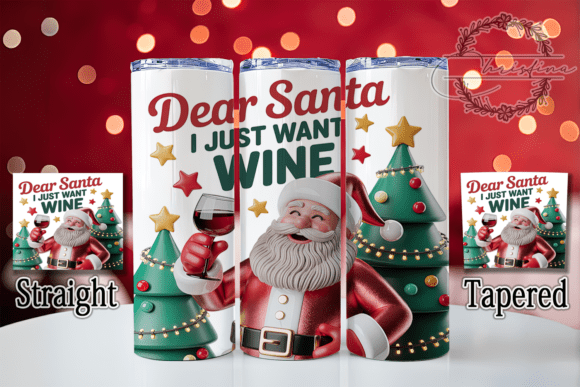
3D Funny Dear Santa Wine Tumbler
In the realm of digital design and physical product creation, the transition from a conceptual file to a tangible item is where most projects either succeed through precision or fail through oversight. For creators, small business owners, and hobbyists who specialize in personalized drinkware, integrating high-quality graphic assets into production workflows is a critical step. The 3D Funny Dear Santa Wine Tumbler design serves as a prime example of how specific visual assets can streamline the creative process, particularly when targeting seasonal markets like Christmas. This digital asset is not merely a festive image; it is a functional component of a broader operational workflow that involves file management, printer compatibility, and customer expectation setting.
Understanding the technical specifications and intended application of this design allows professionals to integrate it seamlessly into their existing systems. Whether you are a full-time entrepreneur running an Etsy shop or a part-time creator looking to capitalize on holiday trends, knowing how to handle 300 DPI PNG files effectively ensures consistency and quality control. The following analysis breaks down the practical implementation of this design, focusing on preparation, compatibility, and execution within a professional workflow.
Technical Specifications and File Preparation
The foundation of any successful print-on-demand or direct-to-film transfer project lies in the integrity of the source file. The 3D Funny Dear Santa Wine Tumbler listing provides two distinct variations: a straight design and a tapered design. Each variation is provided as a high-resolution PNG file at 300 DPI. In a professional workflow, DPI (dots per inch) is a non-negotiable metric for ensuring crisp output. At 300 DPI, the image retains sufficient pixel density to prevent blurring or pixelation when scaled or printed onto curved surfaces like tumblers.
When preparing these files for use, creators must first establish a standardized folder structure. It is advisable to create a dedicated directory for "Seasonal Assets" and further subdivide it by year and format. Upon downloading the ZIP archive containing the 42 total PNG files (21 straight + 21 tapered), immediately verify the integrity of each file. Open them in your preferred raster editing software to ensure there are no hidden artifacts or compression errors introduced during the download process. This initial quality control step saves significant time later, preventing the frustration of discovering a corrupted file only after printing has begun.
The distinction between the straight and tapered designs is crucial for workflow efficiency. A straight design maps linearly across a flat plane, while a tapered design accounts for the narrowing geometry of a 20oz skinny tumbler. By having both options available, you can offer customers more accurate previews or adapt to different blank stock suppliers without needing to manually distort or warp the image in post-production. This dual-format approach reduces manual labor and minimizes the risk of human error during the pre-press phase.
Integration with Sublimation and Printing Workflows
For those utilizing sublimation printing, the interaction between the digital file and the physical substrate is paramount. The 3D Funny Dear Santa Wine Tumbler is optimized for 20oz skinny tumblers, which have specific dimensional constraints. Before sending the file to the printer, ensure that your design software matches the exact dimensions of the tumbler’s printable area. Mismatched dimensions lead to stretched graphics or white borders, which are common sources of customer complaints and returns.
Color management is another critical factor in this stage. The listing includes a color disclaimer noting that screen resolution, monitor settings, and printer calibration can cause variations in final output. To mitigate this, implement a color proofing step in your workflow. Use a calibrated monitor and, if possible, print a test swatch on the actual material before committing to bulk production. This practice aligns with E-E-A-T principles (Experience, Expertise, Authoritativeness, and Trustworthiness) by demonstrating a commitment to accuracy and customer satisfaction. When marketing the final product, transparency about potential color shifts builds trust with buyers who understand the limitations of digital-to-physical conversion.
- Calibration: Regularly calibrate monitors using hardware tools to ensure color consistency across devices.
- Test Prints: Always run a low-volume test batch to verify alignment and color fidelity before scaling up.
- File Naming: Adopt a consistent naming convention (e.g., SantaTumbler_Straight_20oz_v1.png) to avoid confusion when managing large libraries of assets.
Strategic Application in Seasonal Marketing
The timing of product launches is as important as the product itself. The 3D Funny Dear Santa Wine Tumbler is inherently tied to the holiday season, making its integration into marketing calendars a strategic decision. Creators should plan the deployment of this asset weeks in advance of peak shopping periods. Early integration allows for ample time to update product listings, optimize SEO metadata, and schedule social media campaigns.
Consider the diverse audience for this product. While the design features a humorous "Dear Santa" theme, it appeals to a broad demographic ranging from young adults to older consumers who appreciate novelty gift items. Professionals and marketers can leverage this versatility by segmenting their advertising strategies. For instance, target office managers looking for unique holiday party favors or individuals seeking personalized gifts for friends and family. The humor in the design serves as a hook, but the quality of the print and the utility of the tumbler drive the purchase decision.
Furthermore, the digital nature of the asset allows for rapid iteration. If sales data indicates a preference for one design variant over the other, resources can be reallocated accordingly. Perhaps the tapered design resonates more with users of specific tumbler brands, prompting a focus on that SKU. This agility is a key advantage of working with digital downloads, enabling data-driven adjustments to inventory and marketing spend.
Long-Term Value and Asset Management
Viewing the 3D Funny Dear Santa Wine Tumbler solely as a single-use item overlooks its potential for long-term value. Digital assets can be repurposed across multiple platforms and products. Beyond tumblers, the high-resolution PNG files can be resized and applied to mugs, water bottles, or even apparel, provided the aspect ratio allows for it. This cross-product applicability increases the return on investment for acquiring the design.
Organization plays a vital role in maximizing this longevity. Maintain a centralized library of all purchased digital assets, categorized by theme, year, and format. Include metadata tags such as "Christmas," "Humor," "Wine Glass," and "20oz Skinny" to facilitate easy retrieval. When the next holiday season approaches, having a well-organized repository allows for quick setup of new product lines, reducing the time-to-market for seasonal offerings.
Additionally, consider the educational aspect of asset usage. For educators and bloggers, analyzing how this design is implemented can serve as a case study in effective digital product creation. Discussing the importance of file formats, resolution, and clear communication regarding digital-only purchases helps build authority in the niche. Sharing insights on how to handle color discrepancies or resize designs for various applications adds value to your content and engages your audience.
Conclusion on Practical Implementation
Successfully integrating the 3D Funny Dear Santa Wine Tumbler into your business operations requires attention to detail, technical proficiency, and strategic planning. By treating the digital file as a core component of a larger workflow—from file verification and color calibration to marketing segmentation and asset archiving—you enhance both efficiency and product quality. This approach not only improves customer satisfaction but also establishes a robust framework for handling future digital assets. Embrace the process-oriented mindset, prioritize consistency, and leverage the versatility of the design to maximize its impact in your creative projects.