3D Christmas House Ornament SVG: A Versatile Tool for Festive Creativity
The holiday season brings a surge in creative energy, but it also demands efficiency. Whether you are running a small Etsy shop, leading a classroom craft project, or simply looking to add a personal touch to your living room decorations, the resources you choose can make or break your workflow. This is where the 3D Christmas House Ornament SVG becomes an indispensable asset. It is not just a digital file; it is a bridge between simple flat designs and tangible, dimensional art that captures the spirit of the holidays.
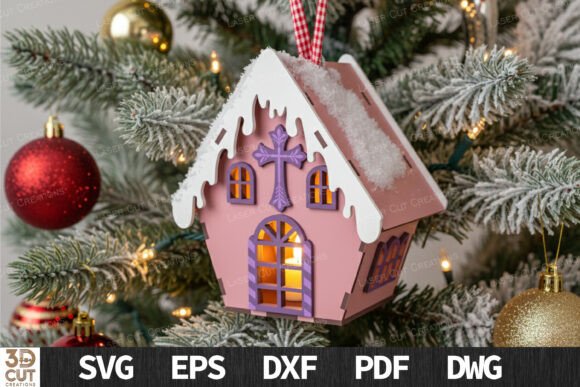
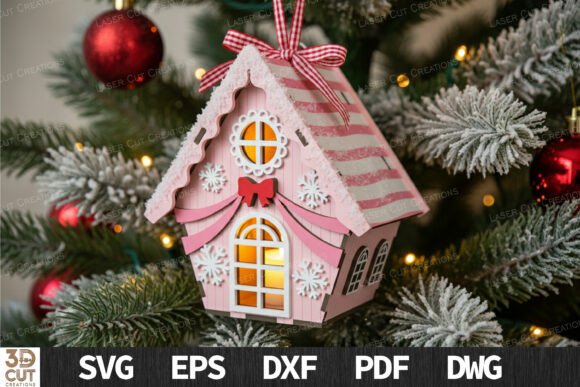
When we talk about a 3D Christmas House Ornament SVG, we are referring to a vector-based graphic design specifically structured to create depth. Unlike standard flat images, these files contain precise coordinates and cut lines that allow software to interpret layers, shadows, and assembly points. The result is a charming, multi-layered house ornament that stands out on a tree or window, offering a sophisticated look without requiring advanced woodworking skills. For creators who value precision and repeatability, this format offers a significant advantage over hand-drawn sketches or low-resolution raster images.
Understanding the File Ecosystem
One of the most compelling aspects of acquiring a 3D Christmas House Ornament SVG package is the variety of formats included. Typically, these zip folders do not contain just one file type. Instead, they offer a comprehensive suite including SVG, DXF, EPS, PDF, and DWG. Understanding why this diversity matters can help you decide which tool to use for your specific project.
- SVG (Scalable Vector Graphics): This is the gold standard for cutting machines like Cricut and Silhouette. It allows for infinite scaling without pixelation, ensuring your intricate roof shingles or window frames remain crisp regardless of size.
- DXF & DWG: These formats are crucial for users working with laser cutters or CNC routers. If you plan to use wood, acrylic, or thick cardboard, these vector line drawings provide the exact path your machine needs to follow.
- EPS & PDF: These are ideal for professional design software like Adobe Illustrator or InDesign. They allow for easy editing of colors and shapes if you want to customize the design before sending it to production.
This multi-format approach ensures compatibility with almost any design software or hardware you might own. You aren’t locked into a single ecosystem. If you start a project on your laptop using Illustrator, you can seamlessly transfer it to a cutting mat for physical creation. This flexibility is particularly valuable for freelancers and small business owners who need to pivot quickly based on client requests or material availability.
Real-World Applications Beyond the Tree
While the name suggests "ornament," the utility of a 3D Christmas House Ornament SVG extends far beyond hanging decorations. The versatility of these designs allows them to be adapted for various media and purposes. Let’s look at how different groups of people utilize these files in practical scenarios.
Home Decor and Personalized Gifts
For hobbyists and everyday users, the primary appeal is customization. Imagine creating a set of ornaments that mimic the architecture of your childhood home or your current neighborhood. By adjusting the scale and materials—using felt for a soft, cozy look or cardstock for a clean, modern aesthetic—you can create heirloom-quality gifts. The 3D aspect adds a tactile element that flat stickers cannot match. Recipients appreciate the effort involved in assembling layered designs, making these perfect for hostess gifts, teacher presents, or family keepsakes.
Commercial Product Lines
Entrepreneurs and small business owners often seek products with high perceived value but low production complexity. A 3D house ornament fits this criteria perfectly. Because the design is pre-engineered, you can produce dozens of units efficiently. You can source affordable materials like balsa wood or colored foam board and assemble them in bulk. These items sell well at holiday markets, online boutiques, and pop-up shops. The key here is branding; you can add your logo to the base layer or include custom tags, turning a generic design into a proprietary product.
Stationery and Packaging Design
Marketers and bloggers frequently overlook the potential of vector assets for print collateral. A 3D Christmas House Ornament SVG can be deconstructed and used as a decorative element on greeting cards, gift tags, or packaging inserts. Instead of printing a flat image of a house, you can use the layered concept to create die-cut windows in envelopes or boxes. When opened, the recipient sees a mini 3D scene. This unexpected interaction enhances brand recall and customer satisfaction. It transforms a standard transaction into a memorable experience.
Textiles and Apparel Printing
If you are into screen printing or heat transfer vinyl (HTV), these designs offer unique opportunities. While you cannot easily print a 3D object on fabric, you can isolate specific layers of the house design. For example, the roof pattern or the chimney detail can be printed on tote bags, aprons, or holiday sweaters. The geometric nature of the 3D model translates well into bold, graphic prints that stand out in a crowded marketplace.
Considerations Before You Start
Before diving into your next crafting session, there are several practical factors to consider to ensure success. First, evaluate your equipment. Not all cutting machines handle intricate internal cuts equally well. If you are using a Cricut Maker or Silhouette Cameo, ensure your blade is sharp enough to penetrate your chosen material cleanly. Dull blades can tear delicate paper layers, ruining the 3D effect.
Second, think about your materials. The choice of material dictates the final look and durability. Cardstock is great for lightweight indoor decor but may warp in humid environments. Wood veneer provides a sturdy, rustic charm but requires more time to sand edges. Foam sheets are easy to work with and hold color vibrantly, making them excellent for children’s crafts. Experimenting with mixed media—such as combining wood bases with paper roofs—can yield stunning results but requires careful planning of adhesive points.
Third, consider the assembly process. A 3D design is only as good as its construction. Plan your workflow to minimize glue messes. Using a bone folder to score fold lines before gluing will give your ornaments professional-looking creases. Take photos of your first attempt to document the sequence; this helps when teaching others or replicating the design later.
Maximizing Creative Potential
The true power of the 3D Christmas House Ornament SVG lies in its adaptability. Don’t feel confined to traditional reds and greens. Use monochromatic palettes for a chic, modern vibe, or metallic foils for a luxurious touch. Combine multiple houses to create a village scene for a centerpiece rather than individual ornaments. Educators can use these files to teach geometry and spatial reasoning, showing students how 2D vectors transform into 3D objects.
Ultimately, whether you are a seasoned pro or a curious beginner, these designs offer a low-barrier entry into high-impact creativity. They save time by providing pre-calculated dimensions while leaving ample room for personal expression. As you explore the possibilities, remember that the goal is not just to complete a project, but to engage in the joy-making process that defines the season. Let your imagination run wild, knowing that the right tools are already in your hands, ready to bring your festive visions to life.